I Am a College Student. Are La Roche-Posay Products Better for Acne-Prone Skin Than Neutrogena?

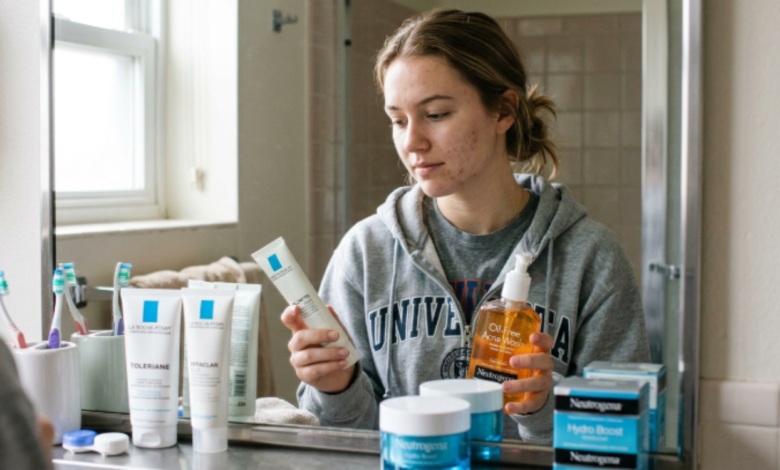
For a I Am a College Student. Are La Roche-Posay Products Better for Acne-Prone Skin Than Neutrogena? surprisingly complicated. Between classes, exams, late nights, changing schedules, stress, and a limited budget, it is understandable to want a skincare routine that is simple and effective. Two brands that frequently appear when people search for acne products are La Roche-Posay and Neutrogena. Both offer cleansers, treatments, moisturizers, and other products designed for blemish-prone skin, but they approach skincare somewhat differently. The important question is not simply which brand is better, but which specific products and active ingredients are more appropriate for your skin type and acne concerns.
Quick Bio Table
| Category | Details |
|---|---|
| Person | College Student |
| Main Concern | Acne-prone skin |
| Skin Needs | Gentle cleansing, acne treatment, hydration and sun protection |
| Brands Compared | La Roche-Posay and Neutrogena |
| Common Acne Ingredients | Salicylic acid, benzoyl peroxide and adapalene |
| Lifestyle Considerations | Classes, studying, stress, limited time and budget |
| Main Goal | A simple, consistent acne-friendly skincare routine |
La Roche-Posay and Neutrogena Take Different Approaches
La Roche-Posay is widely associated with dermatologist-oriented skincare and sensitive-skin formulations. Its Effaclar range is specifically designed around oily and acne-prone skin and includes products containing ingredients such as salicylic acid and benzoyl peroxide. The brand currently offers an Effaclar treatment containing 5.5% micronized benzoyl peroxide, as well as salicylic-acid acne products.
Neutrogena, meanwhile, has a broad acne portfolio covering cleansers and leave-on treatments. Depending on the product and market, its acne range includes familiar ingredients such as salicylic acid and adapalene. I Am a College Student. Are La Roche-Posay Products Better for Acne-Prone Skin Than Neutrogena? This means that comparing the brands only by their names can be misleading. A better comparison is to look at the active ingredient and determine whether it addresses the type of acne you have.
Which Ingredients Matter Most for Acne?
The active ingredient is one of the most important things to examine when selecting an acne product. According to the American Academy of Dermatology, I Am a College Student. Are La Roche-Posay Products Better for Acne-Prone Skin Than Neutrogena? ingredients such as adapalene, benzoyl peroxide and salicylic acid can play different roles in treating acne. Adapalene helps unclog pores and can address blackheads, whiteheads and pimples, while benzoyl peroxide helps reduce acne-causing bacteria. Salicylic acid helps unclog pores and exfoliate the skin.
This is why a La Roche-Posay product can be useful for one student while a Neutrogena product may be more appropriate for another. If your main problem is clogged pores, you may look for a product containing an ingredient that targets congestion. If inflammatory pimples are your main concern, benzoyl peroxide may be useful. I Am a College Student. Are La Roche-Posay Products Better for Acne-Prone Skin Than Neutrogena? The right choice depends on the acne pattern rather than simply the brand printed on the bottle.
Why La Roche-Posay May Appeal to Acne-Prone Students
One reason students may consider La Roche-Posay is its emphasis on products formulated for sensitive and acne-prone skin. The Effaclar range includes treatments aimed at oily and blemish-prone skin, while some products are marketed as non-comedogenic, fragrance-free or suitable for sensitive skin.
For someone whose acne routine often leaves their face feeling dry or irritated, formulation can be especially important. La Roche-Posay’s current Effaclar BPO treatment, for example, contains 5.5% micronized benzoyl peroxide and is marketed as suitable for sensitive and acne-prone skin. I Am a College Student. Are La Roche-Posay Products Better for Acne-Prone Skin Than Neutrogena? The company also describes it as non-drying and free of pore-clogging oils.
However, a stronger concentration or more sophisticated formulation does not automatically mean better results for every person. Benzoyl peroxide can still cause dryness or irritation, particularly when someone introduces too many active products at once. A student should therefore introduce acne treatments gradually and follow the product directions.
Why Neutrogena Can Be Practical for College Students
Neutrogena has an advantage in terms of having a wide range of straightforward skincare products. Students can find cleansers and treatments targeting different acne concerns, which can make it easier to build a routine around a specific active ingredient.
For a student who wants a basic routine without buying numerous specialized products, a simple cleanser, moisturizer and sunscreen may be enough to start. If acne treatment is needed, one targeted active ingredient can then be introduced rather than layering several treatments simultaneously.
The American Academy of Dermatology recommends giving an acne treatment time to work rather than repeatedly changing products. Dermatologists cited by the organization recommend using an appropriate active ingredient consistently for around six to eight weeks when treating mild-to-moderate acne.
La Roche-Posay vs Neutrogena for Oily Skin
Oily skin can make acne management particularly frustrating. Excess oil can contribute to clogged pores, while aggressive cleansing can leave the skin irritated and uncomfortable. Both brands offer products aimed at oily or acne-prone skin, so the better approach is to choose a routine that removes excess oil without excessively stripping the skin.
La Roche-Posay’s Effaclar line is specifically positioned around oily and acne-prone skin. Its current range includes acne treatments, cleansers and products intended to address oiliness and blemishes.
Neutrogena also provides acne cleansers and treatments designed for blemish-prone skin. For a college student, the practical choice may come down to which product has the appropriate active ingredient, fits the budget and feels comfortable enough to use consistently.
Which Is Better for Blackheads and Whiteheads?
Blackheads and whiteheads are types of acne associated with clogged pores. Salicylic acid is particularly relevant because it helps exfoliate the skin and unclog pores. Adapalene is another important acne ingredient because it helps prevent pores from becoming clogged and can treat blackheads and whiteheads.
Both La Roche-Posay and Neutrogena have products that can fit into an acne routine involving these types of ingredients. Therefore, a student should compare the actual formulation instead of assuming that one brand will always produce better results.
If blackheads and whiteheads are persistent despite consistent over-the-counter treatment, professional dermatological advice can help determine whether a stronger treatment is appropriate.
What About Red, Inflamed Pimples?
Inflammatory acne can require a different approach from simple clogged pores. Benzoyl peroxide is particularly useful because it helps reduce acne-causing bacteria and is strongly recommended in dermatological acne guidelines. The American Academy of Dermatology lists benzoyl peroxide among the topical treatments with strong recommendations for acne management.
La Roche-Posay’s Effaclar line currently includes a 5.5% benzoyl peroxide treatment designed for several forms of acne, including blemishes and pimples. The company says the product was tested for acne-prone and sensitive skin.
That does not mean every student should automatically select the highest available benzoyl peroxide concentration. More treatment is not necessarily better, and irritation can make a skincare routine harder to maintain. Starting carefully and following directions is important.
A Simple College Student Acne Routine
A complicated routine is not necessarily an effective routine. For a busy student, a practical routine can begin with gentle cleansing, an appropriate acne treatment, moisturizer and daytime sunscreen.
In the morning, cleanse the skin gently, apply moisturizer if needed, and finish with a broad-spectrum sunscreen. At night, cleanse again and use the selected acne treatment according to its instructions. Avoid introducing several strong active ingredients simultaneously because irritation can make it difficult to determine which product is causing a reaction.
The American Academy of Dermatology recommends non-comedogenic sunscreen with SPF 30 or higher for people managing acne, particularly because inflammation and some acne treatments can increase the risk of dark spots or sun sensitivity.
Budget Matters When You Are in College
Price is an important part of skincare for many students. An expensive product that sits unused because it is difficult to repurchase is not necessarily a practical long-term solution. Consistency is more important than having an elaborate collection of skincare products.
Neutrogena may appeal to students who want widely available basic acne products, while La Roche-Posay may appeal to people who are specifically interested in its Effaclar range and formulations for acne-prone or sensitive skin. Prices and availability vary by country and retailer, so checking the actual cost of the individual product is more useful than comparing the brands generally.
A student should also avoid buying multiple products simply because they are marketed for acne. One appropriate treatment combined with gentle skincare may be easier to tolerate and maintain.
Can La Roche-Posay and Neutrogena Be Used Together?
There is no general reason that two skincare brands must be kept completely separate. What matters is the combination of active ingredients. Using multiple acne treatments at the same time can increase the chance of dryness, redness and irritation.
For example, adding several exfoliating products to a routine that already contains an acne treatment may be unnecessary. A better strategy is to introduce one active treatment and monitor the skin. If there is no meaningful improvement after an appropriate period, a dermatologist or other qualified healthcare professional can help determine the next step. The AAD notes that acne treatment can take several weeks to show improvement and recommends changing or adding treatments thoughtfully rather than constantly switching products.
What Should a College Student Look For?
Rather than asking whether La Roche-Posay is universally better than Neutrogena, consider the specific problem you are trying to solve. For clogged pores, look for an appropriate pore-unclogging ingredient. For inflammatory pimples, benzoyl peroxide may be relevant. For persistent blackheads, whiteheads and recurring acne, adapalene may be an option.
It is also worth considering whether your skin is sensitive, dry, oily or combination. A product that works well for oily skin may be uncomfortable for someone whose skin barrier is already dry or irritated. The most useful skincare routine is one that addresses the acne while remaining comfortable enough to use consistently.
When Should a Student See a Dermatologist?
Over-the-counter skincare can be useful for mild acne, but not every type of acne should be managed only with cosmetic products. Deep, painful nodules or cysts can increase the risk of scarring, and persistent acne that does not respond to appropriate over-the-counter treatment may require professional evaluation. The American Academy of Dermatology specifically recommends professional help when acne is deep, painful, causing scarring, or not improving with non-prescription treatment.
A dermatologist can determine whether prescription treatments or a different combination of therapies is appropriate. This can be particularly valuable for college students who have been trying multiple products without seeing improvement.
Final Thoughts on La Roche-Posay vs Neutrogena
So, are La Roche-Posay products better for acne-prone skin than Neutrogena? There is no universal answer. Both brands offer products containing recognized acne-fighting ingredients, and the most relevant factor is the formulation and active ingredient rather than the brand name alone. La Roche-Posay’s Effaclar line may be appealing to students focused on acne-prone or sensitive skin, while Neutrogena provides a broad selection of accessible acne products. For either brand, choosing an appropriate active ingredient, avoiding unnecessary product combinations and maintaining a consistent routine are more important than simply choosing the more expensive or popular name. If you are building a skincare routine while balancing college life, classes and a limited budget, keeping the routine simple can make it easier to stay consistent. For more practical skincare and lifestyle guides, readers can continue exploring Starinsiderhub.
Read More: I Am a Gen Z Man. How Does the NIVEA MEN Line Stack Up Against Bulldog or Lumin?