I’m a Pregnant Woman. Are NIVEA Products Safe Compared to Burt’s Bees or Mustela?

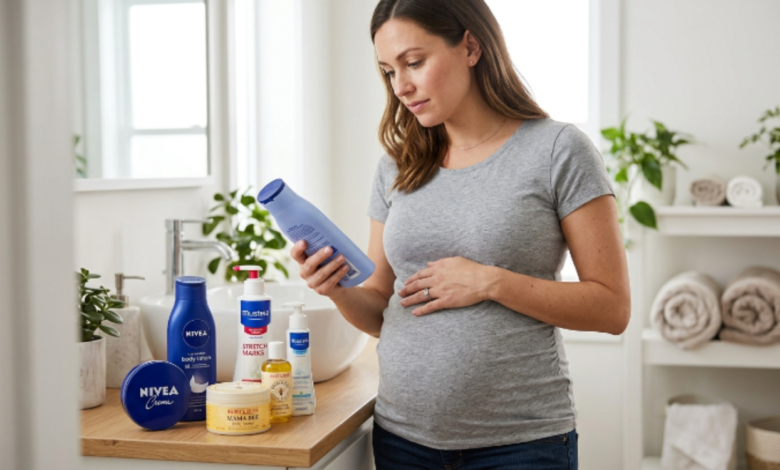
I’m a Pregnant Woman. Are NIVEA Products Safe Compared to Burt’s Bees or Mustela?. Products that worked perfectly before pregnancy may suddenly cause dryness, irritation, sensitivity, or concern about ingredients. For an expecting mother comparing NIVEA, Burt’s Bees, and Mustela, the important question is not simply which brand is “safest.” Instead, it is better to look at the specific product, its ingredients, how it is being used, and whether it is designed for pregnancy-sensitive skin.
NIVEA states that its cosmetic products undergo safety and skin-compatibility evaluations and considers its cosmetic products safe for pregnant and breastfeeding women. Mustela says that most of its products are safe during pregnancy and breastfeeding and has a dedicated Maternity Collection. Burt’s Bees provides ingredient information for individual products, with many of its fragrances naturally derived from essential oils and extracts.
Quick Pregnancy Skincare Guide
| Item | Key Information |
|---|---|
| Life stage | Pregnancy |
| Main skincare concern | Choosing gentle, pregnancy-appropriate products |
| Brands compared | NIVEA, Burt’s Bees, Mustela |
| Main selection method | Check the individual ingredient list |
| Products to approach carefully | Treatments containing pregnancy-restricted ingredients |
| Preferred characteristics | Gentle, moisturizing, suitable for sensitive skin |
| Extra consideration | Fragrance and essential oils may irritate sensitive skin |
| Professional advice | Ask an obstetrician, midwife, dermatologist, or other qualified healthcare professional about specific concerns |
Why Pregnancy Changes the Way You Choose Skincare
Pregnancy can make the skin behave differently because of hormonal and physical changes. Some women experience increased dryness, sensitivity, acne, itching, or changes in pigmentation. A product that was comfortable before pregnancy may therefore feel different during pregnancy even when the formula itself has not changed.
This makes a simple skincare routine particularly useful. Gentle cleansing, regular moisturizing, and appropriate sun protection can help maintain the skin barrier without unnecessarily exposing the skin to large numbers of active ingredients. When choosing products, it is sensible to focus on what the individual formula contains rather than assuming that a brand’s reputation alone determines whether a product is appropriate.
Is NIVEA Safe During Pregnancy?
NIVEA directly addresses pregnancy and breastfeeding in its consumer guidance. The company states that its cosmetic products are evaluated for safety and skin compatibility before being introduced to the market and considers its cosmetic products safe for pregnant and breastfeeding women. NIVEA also recommends seeking advice from a doctor or midwife when an individual has particular health concerns.
For a pregnant woman who already uses a basic NIVEA body lotion, cleanser, or moisturizer, this information can be reassuring. However, it is still useful to examine the exact product rather than treating every NIVEA formula as identical. Different products can have different purposes and different ingredient combinations.
Another important consideration is personal sensitivity. NIVEA notes that although its products undergo skin-compatibility evaluation, manufacturers cannot completely eliminate the possibility of an allergic reaction because individuals can react differently to particular ingredients. Pregnancy can also be a time when skin becomes more reactive.
How Does Burt’s Bees Compare?
Burt’s Bees takes an ingredient-transparency approach on its website. Individual product pages provide ingredient lists using INCI naming conventions, allowing consumers to examine the formula of the specific product they are considering. The company also says that the majority of its fragrances are naturally derived and composed of proprietary blends of essential oils and extracts.
This distinction matters because “natural” does not automatically mean “better for every pregnant woman.” Plant-derived ingredients can still cause irritation or allergic reactions, particularly when the skin is unusually sensitive. Essential oils and fragrances may be perfectly tolerable for one person while being uncomfortable for another.
Therefore, someone choosing Burt’s Bees during pregnancy should focus on the particular formula. A simple moisturizer with ingredients that the user already tolerates may be very different from a fragranced treatment containing multiple botanical extracts.
Why Mustela Is Popular During Pregnancy
Mustela has a particularly strong focus on pregnancy and maternity skincare. The company states that most Mustela products are safe during pregnancy and breastfeeding and directs expecting mothers toward its Maternity Collection.
The Maternity Collection is specifically designed around concerns that can occur during pregnancy, including dry, stretched, and uncomfortable skin. The range includes products such as stretch-mark cream, stretch-mark oil, multipurpose lotion, and other maternity-focused skincare products. Mustela states that its maternity products are safe for mothers and developing babies.
Mustela also describes a testing process involving more than 450 measures and tests, with an independent toxicologist involved in evaluating ingredients and finished formulas. These company statements explain why Mustela positions its maternity range specifically around expecting mothers.
That does not mean every pregnant woman needs Mustela. Someone who already has a simple, comfortable skincare routine may not need to replace everything with a maternity-specific brand.
NIVEA vs. Burt’s Bees vs. Mustela: What Really Matters?
The most useful comparison is based on the purpose of the product. If the goal is everyday moisturizing, a straightforward moisturizer from any of these brands may be suitable if its ingredients are appropriate and the user’s skin tolerates it.
For pregnancy-specific concerns such as stretching abdominal skin, Mustela has a dedicated maternity range. The company specifically markets products for changing skin during pregnancy and says its stretch-mark products are safe from the first month of pregnancy.
NIVEA can be considered when a woman wants familiar everyday skincare, particularly because the company explicitly states that its cosmetic products are considered safe during pregnancy and breastfeeding. Burt’s Bees may appeal to consumers who prefer formulas containing naturally derived ingredients, but its individual product ingredients should still be checked carefully.
The result is that there is no universal need to switch brands simply because pregnancy has started. The individual product and its ingredients are more important than the logo on the packaging.
Which Skincare Ingredients Need Extra Attention During Pregnancy?
Pregnancy is not the ideal time to experiment casually with powerful skincare treatments. The American College of Obstetricians and Gynecologists provides guidance on several commonly used skincare ingredients. In particular, topical retinoids should be avoided during pregnancy. ACOG also discusses ingredients such as benzoyl peroxide, azelaic acid, glycolic acid, and topical salicylic acid in its pregnancy skincare guidance.
This is especially relevant when comparing ordinary moisturizers with specialized facial treatments. A basic body lotion and a concentrated acne or anti-aging treatment should not be judged in exactly the same way.
It is also important not to assume that an ingredient is safe merely because it is plant-derived or marketed as natural. The complete formula, concentration, route of exposure, frequency of use, and the person’s individual circumstances can all matter.
Fragrance-Free Products May Be Helpful for Sensitive Skin
Pregnancy can make previously comfortable fragrances feel overwhelming or irritating. A fragrance-free product can therefore be a practical choice for someone who has developed sensitivity.
Mustela’s maternity range includes fragrance-free options. The company specifically identifies its Stretch Marks Oil and Organic Nursing Comfort Balm as fragrance-free.
Burt’s Bees, meanwhile, says many of its fragrances are naturally derived from essential oils and extracts. That may appeal to consumers who prefer botanical fragrance, but natural fragrance can still be unsuitable for someone experiencing sensitivity.
NIVEA offers many different formulations, so consumers should examine the individual packaging and ingredient list if fragrance is a concern. The simplest choice for very reactive skin is generally to look for a product specifically labeled fragrance-free and designed for sensitive skin.
What About Stretch Marks?
Stretch marks are extremely common during pregnancy. They can appear on the abdomen, breasts, hips, thighs, or other areas where the skin stretches. Genetics, hormones, and the speed and degree of skin stretching can all contribute.
Moisturizers and oils can help keep the skin feeling comfortable, soft, and hydrated, but no cosmetic product can guarantee that stretch marks will not occur. Mustela itself acknowledges that pregnancy-related stretch marks cannot necessarily be prevented completely, although moisturizing can support skin comfort and appearance.
This means a pregnant woman does not necessarily need an expensive specialist product simply because she wants to care for her skin. A well-tolerated moisturizer may be enough for everyday hydration. A maternity-specific product can instead be considered when someone wants a formula specifically designed around pregnancy-related skin concerns.
How to Build a Simple Pregnancy Skincare Routine
A straightforward routine can often be easier to manage than a cabinet full of active treatments. In the morning, a gentle cleanser can be followed by a moisturizer and appropriate sun protection. During the day, additional moisturizer can be applied to areas that feel dry or tight.
After bathing, applying moisturizer while the skin is still slightly damp can help support comfortable hydration. During pregnancy, it is also sensible to avoid aggressive scrubbing if the skin has become sensitive.
Before adding a new active treatment, examine the ingredient list and discuss questionable ingredients with a healthcare professional. A small patch test can also help identify products that irritate the skin, although a patch test cannot determine whether an ingredient is medically appropriate during pregnancy.
What Should a Pregnant Woman Choose?
For someone deciding between NIVEA, Burt’s Bees, and Mustela, the answer depends on what she needs. NIVEA provides broad everyday skincare and explicitly states that its cosmetic products are considered safe during pregnancy and breastfeeding. Burt’s Bees offers detailed ingredient information, making it possible to assess individual formulas, while many of its fragrances are naturally derived. Mustela offers a dedicated maternity range designed around pregnancy and postpartum skincare concerns.
The practical approach is therefore to select the individual product that fits the intended use, has an ingredient profile appropriate for pregnancy, and feels comfortable on the skin. Someone with particularly sensitive skin may prefer a simple fragrance-free moisturizer, while someone looking specifically for maternity-focused care may consider a product from Mustela’s Maternity Collection.
Final Thoughts
For a pregnant woman asking whether NIVEA products are safe compared with Burt’s Bees or Mustela, there is no need to assume that one complete brand is automatically safe while another is not. NIVEA states that its cosmetic products are considered safe for pregnant and breastfeeding women, Mustela states that most of its products are safe and has a dedicated maternity collection, and Burt’s Bees provides detailed ingredient information for individual formulas.
The best approach is to check each product individually, pay attention to pregnancy-relevant ingredients, and choose gentle formulas that the skin tolerates well. If there is uncertainty about a particular ingredient, especially in a treatment product, an obstetrician, midwife, dermatologist, or pharmacist can provide advice appropriate to the individual’s pregnancy. Readers looking for straightforward pregnancy skincare information can find more practical comparisons and guides on starinsiderhub, where product choices can be explored with a focus on ingredients, everyday use, and informed skincare decisions..
Read More: I’m a 30-Year-Old Working Mom. How Do Olay Moisturizers Perform Compared to L’Oréal’s Skincare Line?